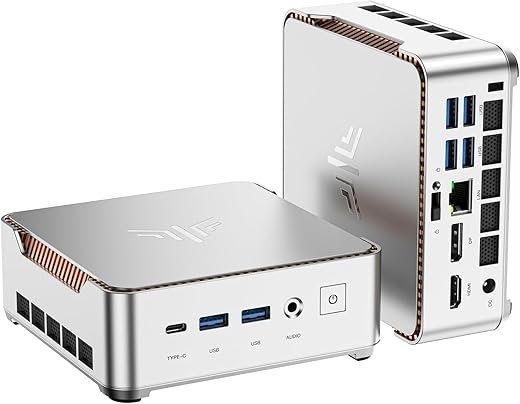
They Pick the Best AI Mini PCs: Technical Verdicts
Tiny boxes, BIG brains — which mini PC actually runs serious AI and which is just window dressing?
Small chassis. Massive ambition. A tiny PC can replace a tower — if the silicon, I/O, and thermal design cooperate. Two racks of servers aren’t required for many AI and pro workflows anymore.
He imagines a clutter-free desk, multiple displays, and a machine that crunches models without sounding like a jet. These picks show where mini PCs excel, where they trade off, and which ones to pick for workstation, edge AI, or fleet deployment.
Top Picks
<



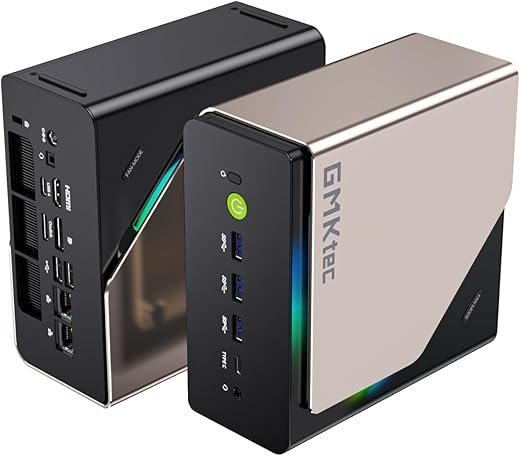
GMKtec EVO-T1 Ultra 9 Mini PC
Delivers class-leading CPU throughput, large memory capacity, and extensive expansion in a compact chassis. Best suited to users who need sustained multitasking, multi-display workflows, and light GPU-accelerated workloads without a full desktop footprint.
Hero — what it is and who it's for
The EVO-T1 positions itself as a high‑performance AI-capable mini PC for power users who need desktop-class CPU performance and heavy I/O in a compact chassis. It targets creators, home lab operators, and professionals who want an always‑on workstation that can drive multiple high‑resolution displays and host VMs or inference workloads.
Quick summary
It combines an Intel Core Ultra 9 285H with large DDR5 capacity and PCIe 4.0 storage options to deliver sustained multi‑threaded performance. The integrated Intel Arc 140T and a 13 TOPS NPU offer a useful blend of general compute, media acceleration, and entry-level AI acceleration.
Technical breakdown
Key technical takeaways:
Real‑world use cases
Practical examples where it excels:
Pros/Cons and final verdict
Pros:
Cons:
Final verdict: The EVO‑T1 is one of the most capable mini PCs for professionals who need a compact machine that behaves like a desktop. Compared with edge developer boards it offers far more general‑purpose compute and expansion, and versus other mini PCs it stands out for raw CPU throughput and I/O. Buyers who prioritize low-noise home theater or lightweight mobile use might prefer a quieter, lower-power option, but for workstation-grade capability in a small chassis this unit is hard to beat.
Beelink GTi14 Intel Ultra 9 Mini PC
Combines an Intel Core Ultra 9 185H with fast DDR5 and dual 2.5GbE in a sleek chassis, delivering excellent desktop-like performance for multimedia, virtualization, and light AI workloads. It is a strong all‑rounder for prosumers who want a ready‑to‑use mini PC.
Hero — what it is and who it's for
The GTi14 is a turnkey mini PC that aims to give desktop-grade responsiveness in a compact aluminum chassis. It is appropriate for power users who run mixed workloads: virtual machines, media servers, productivity, and occasional gaming.
Quick summary
Equipped with an Intel Core Ultra 9 185H, DDR5 memory, and a flexible I/O stack (Thunderbolt 4, HDMI, DP), it enables multi‑display setups and NVMe storage expansion while remaining quiet and space‑efficient.
Technical breakdown
Key details:
Real‑world use cases and final verdict
The GTi14 is a reliable choice for users migrating from full desktops who want a smaller footprint without compromising on performance. Compared to the GMKtec EVO‑T1 it offers similar CPU responsiveness but in a more consumer‑polished package with slightly different expansion tradeoffs. Those planning Linux-only deployments should validate kernel/driver support; for Windows-based creative workflows or home servers it provides strong value and practical connectivity for modern workflows.
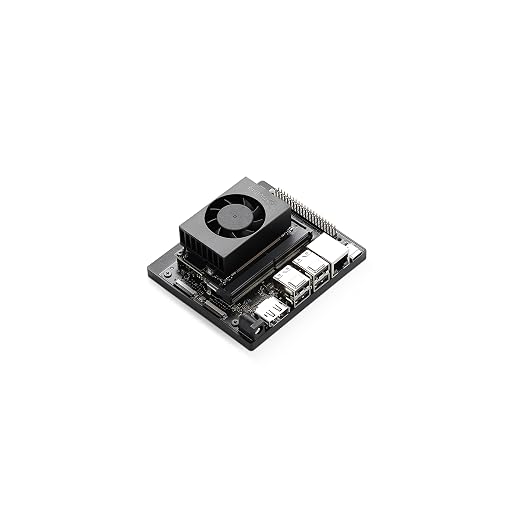
NVIDIA Jetson Orin Nano Super Kit
Delivers an excellent TOPS-per-dollar ratio and supports NVIDIA's software stack for robotics and vision. Ideal for developers prototyping local LLM inference, vision pipelines, and robotics at the edge with real‑time constraints.
Hero — what it is and who it's for
The Jetson Orin Nano Super Developer Kit is an edge AI compute module plus carrier intended for developers and integrators building robotics, vision, and local generative AI solutions. It trades general‑purpose desktop features for focused AI throughput, power efficiency, and a rich SDK.
Quick summary
This kit provides a modular development path with an Orin Nano module (Ampere GPU + 6‑core CPU) and a carrier board offering CSI camera connectors, PCIe slots, and flexible I/O. It is optimized for inference workloads and running modern transformer and vision models locally.
Technical breakdown
Important technical points:
Real‑world use cases and limitations
Where it makes most sense:
Limitations: the dev path requires familiarity with Linux and NVIDIA tooling; first‑time users may spend non‑trivial time on JetPack/SDKManager flashing and driver configuration. Cooling and power profiles will affect sustained throughput.
Final verdict: For engineers and researchers prioritizing local AI inference and rapid prototyping, the Orin Nano Super kit is compelling. Compared to general mini PCs, it offers far better per‑watt AI performance but lacks the plug‑and‑play desktop polish. Teams should budget time to learn NVIDIA's software workflow and plan thermal/power provisioning for sustained workloads.
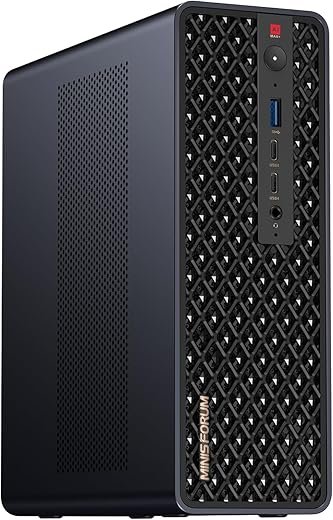
MINISFORUM X1 Pro Ryzen AI Mini PC
Pairs AMD Ryzen AI performance with extensive I/O and practical AI conveniences like Copilot and hardware NPU. Targets content creators and professionals who want a capable mini workstation with modern connectivity and expandability.
Hero — what it is and who it's for
The X1 Pro targets power users who want a compact AMD‑based mini workstation with explicit AI-focused features and broad connectivity. It is suited for content creators, developers, and office power users who need a blend of CPU/GPU power and modern I/O.
Quick summary
MINISFORUM combines an AMD Ryzen AI 9 HX370 with Radeon 890M graphics, DDR5 memory, and PCIe 4.0 NVMe storage to create a responsive desktop replacement in a small enclosure. It adds consumer-friendly AI utilities such as Copilot and recall functions to improve productivity.
Technical breakdown
Notable technical items:
Real‑world use cases and final verdict
Typical use cases include light-to-moderate gaming, multi‑monitor creative work, and localized AI-assisted productivity. Compared with Intel-based mini PCs it offers stronger AMD multi‑thread throughput and a richer feature set for AI-Aware workflows. Buyers should verify whether they prefer the convenience of bundled AI features or a clean OS image; firmware and driver maturity can influence long-term experience. Overall, the X1 Pro is a strong value proposition for professionals who want a capable, expandable mini workstation.
NVIDIA Jetson Xavier NX Developer Kit
Offers excellent inference performance in a compact, low‑power platform with mature SDK support. It is a practical choice for developers needing efficient multimodal AI on constrained hardware.
Hero — what it is and who it's for
The Jetson Xavier NX developer kit is a compact, power‑sipping AI module aimed at embedded developers and integrators who need efficient inference on vision and robotics workloads. It provides GPU tensor cores and a Linux-based development environment to move from prototype to product.
Quick summary
Xavier NX delivers an attractive combination of performance (~10x Jetson TX2 claims in marketing), 10 W power modes for efficient deployment, and a hardware/software toolchain that supports containerized applications and continuous updates.
Technical breakdown
Technical highlights:
Real‑world use cases
Typical deployments include:
Final verdict: Xavier NX is a sensible middle ground between very small entry modules and larger Orin family parts. It is particularly well suited when power budget and thermal constraints are priorities. Compared with Orin Nano, it is older architecture but still highly capable for many real-world inference tasks; compared with general purpose mini PCs, it focuses on inference efficiency rather than desktop familiarity.
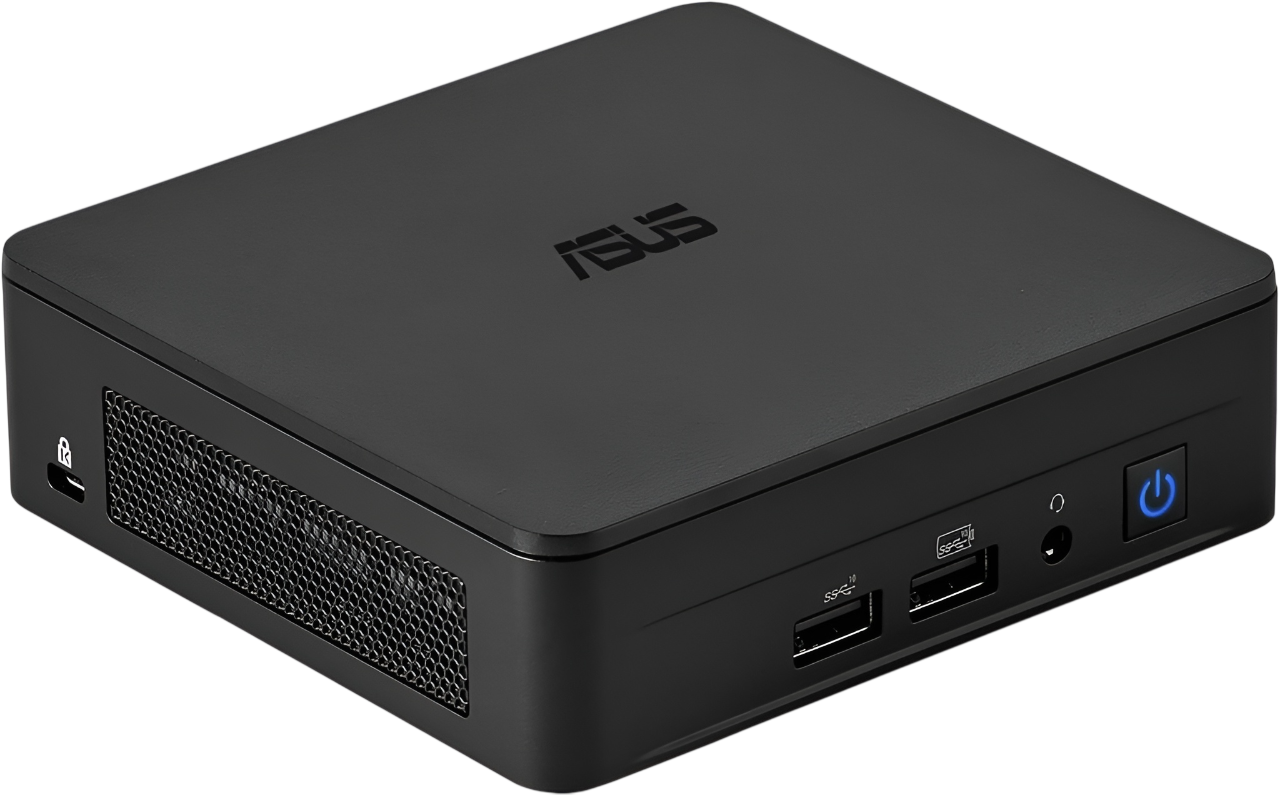
ASUS ExpertCenter PN54 Ryzen AI 7 Barebone
Offers a compact, serviceable starting point for managed deployments and customization with hardware TPM and toolless access. Best for IT teams who will populate storage and memory and value 24/7 reliability in a small form factor.
Hero — what it is and who it's for
The PN54 barebone is ASUS's compact solution for business and managed IT environments that need AI-accelerated tasks in a small footprint. It is intended for IT teams that want a standardized chassis they can populate and manage centrally.
Quick summary
It pairs an AMD Ryzen AI 7 class CPU (6 cores) with the XDNA2 NPU for on‑device acceleration, along with enterprise features like hardware TPM and dual Ethernet. The toolless design facilitates quick RAM and storage upgrades at scale.
Technical breakdown
Key attributes:
Real‑world use and final thoughts
This is best deployed where centralized IT will provision RAM, storage and OS images. Compared with consumer mini PCs, it gives better lifecycle and manageability for SMBs, but costs can rise once components are added. Organizations should verify RAM compatibility lists and rely on vendor support to avoid out‑of‑box issues. For buyers who want a ready-to-run system rather than a barebones chassis, preconfigured vendors may be a better fit.
ASUS PN54 Ryzen AI 5 Barebone Mini PC
Provides the same chassis and management features as the AI 7 variant but with a lower-performance Ryzen AI 5 SKU. Good for scale deployments where cost and manageability outweigh raw compute needs.
Hero — what it is and who it's for
This model is the more budget-minded sibling in the ASUS PN54 family, intended for enterprise and small business deployments requiring compact hardware that can be serviced and provisioned at scale.
Quick summary
It retains the PN54's chassis, dual 2.5GbE and Wi‑Fi 7 connectivity, and XDNA2 NPU but substitutes a Ryzen AI 5 processor for lower price and power consumption. It's aimed at users running office suites, virtual desktops, and lightweight inference tasks.
Technical breakdown
Important highlights:
Real‑world use cases and final verdict
Best for kiosks, digital signage, thin-client replacements, and light office VDI. Compared to the AI 7 model it offers lower CAPEX but also less future-proofing for heavier workloads. Organizations should factor in the total cost once memory and storage are added and confirm vendor compatibility lists to avoid procurement headaches.
NVIDIA Jetson TX2 Development Kit
Provides a reliable, low‑power embedded GPU platform for established projects and older software stacks. Best used where compatibility with TX2‑based deployments is required or where budget constrains newer options.
Hero — what it is and who it's for
The Jetson TX2 development kit is an older NVIDIA embedded platform intended for developers maintaining or iterating on TX2‑based systems. It excels in low-power embedded use cases where the hardware-software stack is already validated.
Quick summary
TX2 offers reasonable performance for classical CNN-based vision tasks and robotics but is not competitive with newer Jetson modules for transformer/Large Model inference workloads. It remains useful for projects that prioritize proven stability and ecosystem maturity.
Technical breakdown
Key points:
Real‑world use cases and final thoughts
It is best suited for ongoing projects already built around TX2 where revalidation cost outweighs hardware benefits of migration. For new projects, newer Jetson Orin or Xavier modules often deliver better long‑term value. In comparison with modern mini PCs, TX2 trades desktop convenience for embedded efficiency and lower absolute throughput.
Final Thoughts
Top overall pick: GMKtec EVO-T1 Ultra 9 Mini PC — It delivers the highest sustained CPU throughput, large memory capacity, and useful expansion in a compact chassis. It is the recommended choice for professionals who need desktop-class multitasking, multi-display productivity, virtual machines, and light GPU-accelerated inference without a full desktop tower. Its strengths are raw CPU performance, memory scalability, and expansion slots; ideal for developers, content creators, and small workstations.
Best edge AI / dev pick: NVIDIA Jetson Orin Nano Super Kit — For prototyping local LLM inference, computer vision pipelines, and robotics at the edge, it gives the best TOPS-per-dollar and seamless integration with NVIDIA’s SDKs. It is the go-to for developers building real-time, low-power AI solutions or field-deployable models.
Honorable mentions: Beelink GTi14 Intel Ultra 9 Mini PC for a balanced, out-of-the-box desktop-class experience with dual 2.5GbE and strong value; MINISFORUM X1 Pro Ryzen AI Mini PC for creators who want AMD Ryzen AI features and rich I/O.
Concise guidance: choose the GMKtec EVO-T1 when CPU throughput and expandability matter most; choose the Orin Nano Super Kit when power efficiency, TOPS-per-dollar, and NVIDIA edge tooling are the priority.