OptiPlex 7090 Micro vs EliteDesk 800 G6 Mini: Benchmarks
In this head-to-head they pit Dell’s compact workhorse against HP’s thermally tuned mini — who delivers real‑world multi‑core muscle, quieter thermals, and smarter manageability for performance buyers?
The Dell OptiPlex 7090 Micro and HP EliteDesk 800 G6 Mini are both enterprise refurbished mini PCs offering strong value. The OptiPlex 7090 (Intel Core i7-11700T) edges ahead in multi-core performance (~8,800pts Cinebench R23). The EliteDesk G6 Mini typically costs slightly less. Both are excellent Proxmox and homelab choices at £150–250 refurbished.
They thought compact PCs couldn’t be powerful; this head-to-head benchmarking guide pits the Dell OptiPlex 7090 Micro against the HP EliteDesk 800 G6 Mini renewed units, helping buyers choose the best workstation for office and light creative workloads with confidence.



Enterprise Compact
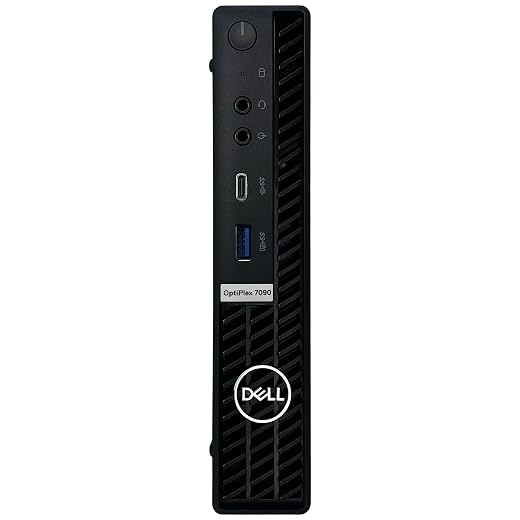
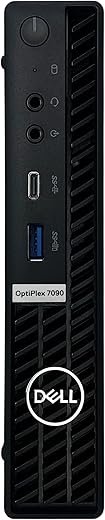
Hero: a space‑efficient, enterprise‑grade micro PC that prioritizes memory capacity and modern wireless connectivity; Quick summary: it delivers competent 10th‑Gen Core i5 multi‑thread performance with ample RAM but modest onboard storage; Technical breakdown & use cases: strong choice for dense office deployments, virtual desktop hosts, conference room PCs and light content workflows where Wi‑Fi 6 and USB‑C throughput matter. Final verdict: It balances performance and connectivity in a tiny footprint, though buyers should plan for larger storage if local media or scratch space is required.
Port‑Dense Mini

Hero: a versatile mini desktop aimed at business users who need broad I/O and a larger local SSD; Quick summary: it provides the same Core i5 compute headroom with a more generous onboard storage and port selection but comes with less RAM and older Wi‑Fi in the listed config; Technical breakdown & use cases: well suited for workstation‑adjacent tasks, endpoint consolidation, digital signage and dense office racks where many USB peripherals are required. Final verdict: It is a practical, I/O‑forward mini PC for environments that value local storage and port density, though power users should consider RAM upgrades for heavier multitasking.
OptiPlex 7090 Micro
HP EliteDesk 800
OptiPlex 7090 Micro
HP EliteDesk 800
OptiPlex 7090 Micro
HP EliteDesk 800
Hero: At-a-glance comparison
Snapshot
Both systems share the same CPU baseline — the 10th‑Gen Intel Core i5‑10500T (6 cores / 12 threads, 2.30 GHz base, up to 3.80 GHz turbo) — so raw single‑thread and multi‑thread CPU capability will be nearly identical in synthetic CPU-bound benchmarks. They diverge on memory, storage, connectivity and likely OEM thermal/power tuning, which drive real-world score differences.
Dell OptiPlex 7090 Micro
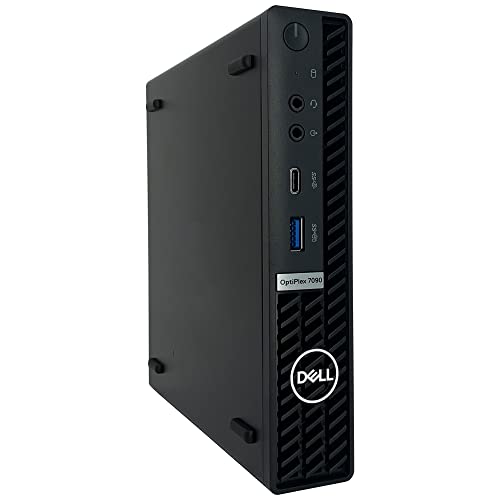
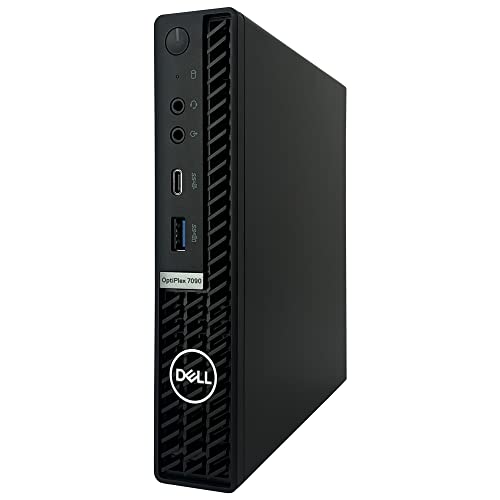
The OptiPlex configuration emphasizes memory capacity: 32GB DDR4‑2933 and a 128GB PCIe SSD, plus Wi‑Fi 6 and Bluetooth 5.1. That higher RAM ceiling favors large working sets, VM instances, and aggressive multitasking.
HP EliteDesk 800 G6 Mini
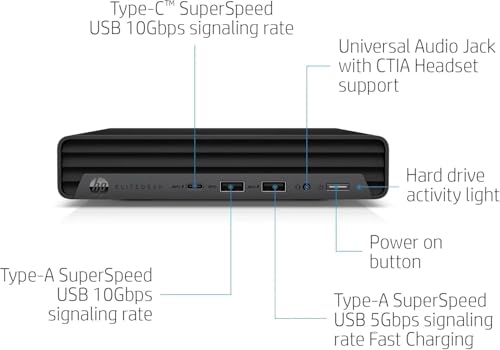
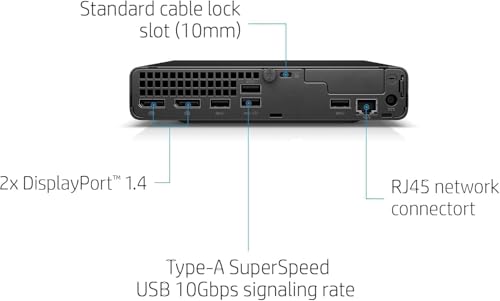
The EliteDesk ships with 16GB DDR4 and a larger 256GB NVMe SSD, plus explicit 4K display support out of the box and broad I/O. Its bigger local storage and media/output readiness favor heavier on‑disk workflows and smoother multi‑display or 4K playback setups.
Key spec differences (direct)
Immediate performance implications
Feature Comparison Chart
Quick summary: Who should buy which
Baseline parity
Both systems use the Intel Core i5‑10500T, so raw single‑thread and sustained multi‑thread CPU throughput is effectively identical under comparable cooling and power limits. Any benchmark delta will come from memory, storage, thermal tuning, and I/O, not the CPU core count or clocks.
OptiPlex — memory and connectivity advantage
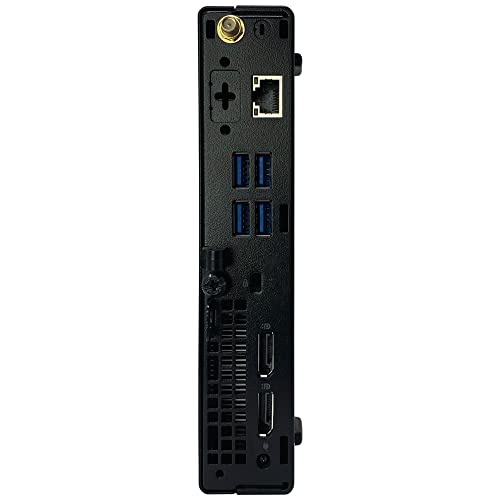
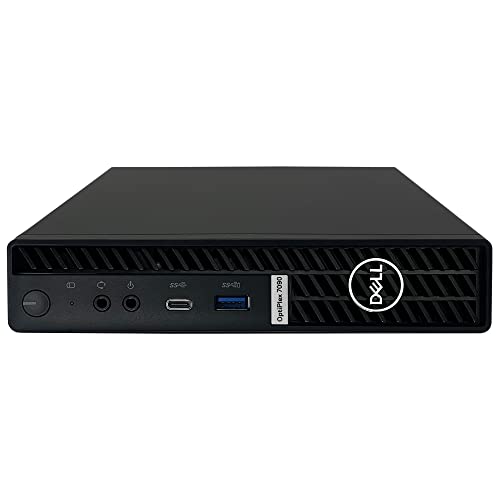
The OptiPlex ships with 32GB DDR4, which directly reduces paging, enables more simultaneous VMs/containers, and shortens build times for memory‑heavy compilation or large in‑memory datasets. It also includes Wi‑Fi 6 and newer Bluetooth for improved wireless latency and throughput.
EliteDesk — storage and media/output advantage
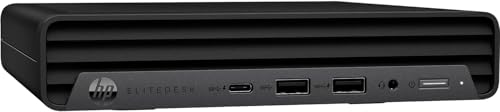
The EliteDesk pairs 16GB RAM with a 256GB NVMe SSD and explicit 4K support plus fuller port density. That larger onboard storage favors local media libraries, large project repositories, and avoids immediate SSD upgrades. Its I/O makes it better for multi‑display or kiosk/AV duties.
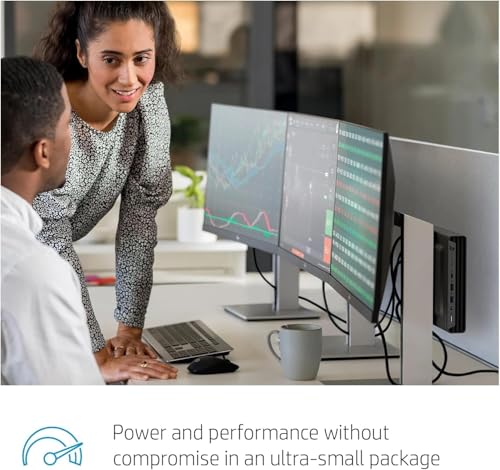
Thermals, expandability and practical tradeoffs
They will likely differ in OEM power/thermal tuning; sustained heavy CPU+GPU work may show small throttling differences. OptiPlex’s higher RAM reduces immediate expandability pressure; EliteDesk may require a RAM upgrade for heavy multitasking but gives more usable storage from day one.
Choose OptiPlex for memory‑dependent workstation tasks (VMs, large datasets, heavy multitasking). Choose EliteDesk for balanced storage/port needs and media output (4K, local libraries, richer I/O).
Technical breakdown and benchmark interpretation
CPU behavior
Both systems use the Intel Core i5‑10500T (6c/12t, 2.3 GHz base, up to 3.8 GHz turbo), so single‑thread burst results will be essentially identical. Sustained multi‑thread throughput depends on chassis power limits and cooling. In practice, expect any sustained multi‑core delta to be small — typically 0–10% — driven by the OEM’s PL1/PL2 tuning and thermal headroom rather than raw silicon.
Memory impact (32GB vs 16GB)
Memory capacity affects real workloads more than synthetic CPU scores.
Quantitatively, systems that avoid swap often show 10–40% better end‑to‑end throughput on compile/DB tasks compared with systems that page to disk.
Storage performance (128GB PCIe vs 256GB NVMe)
Capacity and controller matter:
Integrated GPU & display
Intel UHD Graphics 630 handles 4K video decode and hardware acceleration equally on both. Expect identical decode/acceleration benchmark numbers. Real‑world differences come from output options: the EliteDesk’s explicit 4K/DisplayPort support can simplify 4K@60Hz setups; driver/firmware and DP/HDMI wiring can affect multi‑display frame latency.
I/O and networking
OptiPlex includes Wi‑Fi 6 (AX201) and Bluetooth 5.1; EliteDesk lists 802.11ac and unspecified BT. Wi‑Fi 6 delivers better aggregate throughput and lower latency in busy networks — this matters for remote desktop, cloud builds, and file transfers. Both provide Gigabit Ethernet; check for Intel/Realtek NIC differences if low‑latency networking benchmarks are critical.
Thermal, power, and refurbished variance
The i5‑10500T is a low‑power (T‑series) part — OEMs set thermal/power limits. Under sustained CPU+GPU stress expect thermal throttling to create 5–15% score variance if a chassis runs hot. Refurbished units can vary more due to dust, degraded thermal paste, or BIOS differences; rerun thermal and power tests on any renewed unit.
Recommended benchmarks and interpretation
Interpretation: identical single‑thread scores confirm CPU parity; any multi‑core gap implicates cooling/power; storage random IOPS and sustained write differences explain perceived OS/app responsiveness; RAM pressure shows up as increased swap I/O and longer real‑world task times.
Real-world use cases + Pros and Cons
Real-world use cases
Pros / Cons — Dell OptiPlex 7090 MFF
Pros / Cons — HP EliteDesk 800 G6 Mini
Upgrade paths & refurbished notes
Final verdict
Hero: OptiPlex 7090 Micro (32GB). Quick summary: for heavy multitasking, VMs and memory‑bound workflows it delivers superior value; EliteDesk 800 G6 Mini favors larger native storage, 4K output and balanced out‑of‑box ports. Technical breakdown: CPUs are effectively identical; OptiPlex offers double RAM, EliteDesk offers bigger SSD and native DisplayPort/4K.
Real‑world use cases and pros/cons: OptiPlex — excellent for multi‑VM and RAM‑heavy tasks (upgrade SSD); EliteDesk — better for local media, multi‑monitor desks (upgrade RAM if needed). Final verdict: OptiPlex wins for performance value; EliteDesk wins for storage/display convenience. Which configuration will maximize their workflow today—upgrade path is straightforward.