What Is a Mini PC? Complete Explainer for 2026
A mini PC is a fully functional desktop computer with a volume under 2 litres — roughly the size of a thick paperback book. It connects to a monitor, keyboard, and mouse like a standard desktop, runs Windows 11 or Linux, and handles everything from web browsing to developer workloads. The difference is size: a mini PC takes up about one-tenth the space of a traditional desktop tower.
How Does a Mini PC Work?
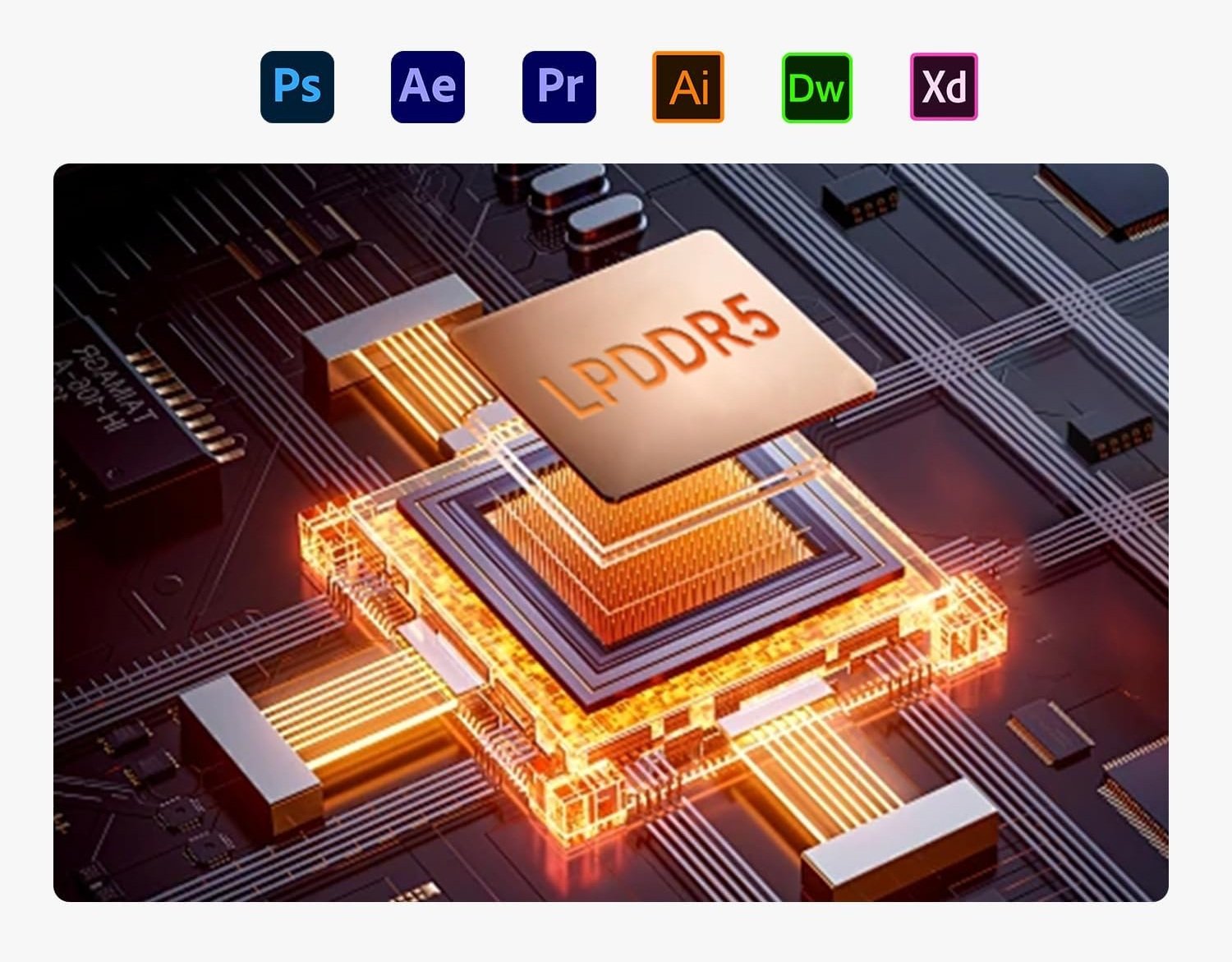
Mini PCs use the same components as laptops in a fixed, fanless or actively-cooled chassis designed to sit on a desk or mount behind a monitor. The processor is typically a mobile CPU — an AMD Ryzen or Intel Core — soldered or socketed onto a compact motherboard. RAM is either LPDDR5 (soldered) or DDR5 SO-DIMM (removable). Storage is almost always M.2 NVMe. Connectivity is via USB-A, USB-C/Thunderbolt, HDMI, DisplayPort, and ethernet ports on the front and back of the unit.
Mini PC vs Desktop vs Laptop
Mini PCs sit between laptops and desktops in almost every dimension. They’re more powerful than most laptops at the same price, less powerful than a full desktop, but far more efficient than both. Key trade-offs:
- vs Laptop: No battery, no screen — but 30–50% cheaper for equivalent CPU performance. Better for fixed desk setups.
- vs Desktop: 80% less power consumption, 10x smaller — but no GPU upgrade path, limited CPU options.
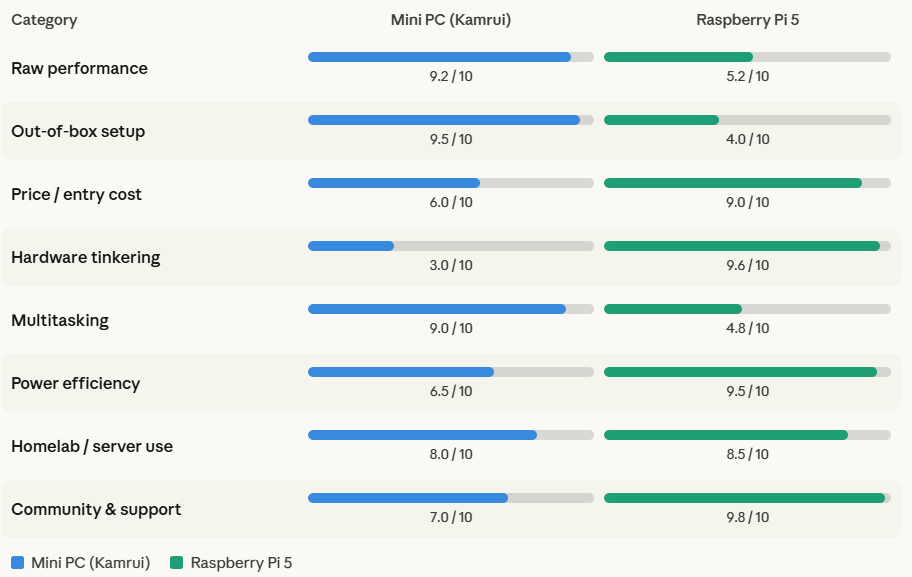
- vs Raspberry Pi: x86 compatibility, Windows support, significantly more CPU performance — but higher cost.
What Are Mini PCs Used For?
Mini PCs serve four main use cases in 2026. Everyday computing: web browsing, video calls, office apps, streaming. A £170 Intel N100 model handles all of this without issue. Development: coding, Docker containers, local dev environments. An AMD Ryzen 7840HS mini PC manages 40-container stacks comfortably. Home lab and servers: Proxmox, NAS, Home Assistant — always-on workloads where low idle power (6–8W) matters. Gaming: AMD Radeon 780M/890M integrated graphics run 1080p gaming at playable framerates on titles from the last 3–4 years.
What Specs Does a Mini PC Have?
A typical mid-range mini PC in 2026 has: an AMD Ryzen 7 7840HS or 8745HS processor, 16–32GB LPDDR5 or DDR5 RAM, a 512GB–1TB M.2 NVMe SSD, Wi-Fi 6E, Bluetooth 5.3, 2.5GbE ethernet, 2–4 USB-A ports, 1–2 USB-C/Thunderbolt ports, 2 HDMI or DisplayPort outputs, and a 120W power adapter. Physical size is typically 12cm × 12cm × 5cm.
How Much Does a Mini PC Cost?
Budget mini PCs (Intel N100): £150–200. Mid-range (AMD Ryzen 7 7840HS): £300–400. High-performance (AMD Ryzen 9 7940HS): £350–500. AI/workstation (AMD Ryzen AI Max): £700–900. Refurbished business units (HP EliteDesk, Dell OptiPlex): £100–180.
Should I Buy a Mini PC in 2026?
Buy a mini PC if: you have a fixed desk, want to keep it quiet, want low electricity costs, or want to VESA-mount it behind a monitor. Don’t buy a mini PC if: you move your computer between locations (get a laptop), need to run discrete GPU workloads like 3D rendering or serious gaming (get a desktop), or plan to upgrade the CPU in the future (not possible in mini PCs).
For most people who don’t move their computer and don’t need extreme GPU performance, a mini PC is a better choice than a full desktop in 2026. See our best mini PC picks for 2026 or compare mini PC vs laptop.
Top Pick : best-acer-mini-pc